The Goat, or Who Is Sylvia? ౼ A Comprehensive Overview
Finding downloadable PDF versions of Edward Albee’s play, “The Goat, or Who Is Sylvia?”, requires careful consideration of legality and source reliability.
Numerous online resources offer access, including academic databases and online bookstores, with file sizes varying around 6MB for complete scripts.
Edward Albee’s The Goat, or Who Is Sylvia?, penned in 2002, stands as a profoundly challenging and controversial work, immediately sparking debate upon its premiere. The play delves into the complexities of love, societal boundaries, and the very nature of taboo. It centers on Martin Gray, a successful architect, who unexpectedly reveals a deeply unsettling secret: he has fallen in love with, and is having a relationship with, a goat named Sylvia.
This revelation shatters the carefully constructed world of Martin and his wife, Stevie, forcing them – and the audience – to confront uncomfortable questions about the limits of acceptable affection and the foundations of marriage. The play’s impact is amplified by its deliberate provocation, pushing the boundaries of theatrical convention and prompting intense critical analysis. Finding a PDF version allows for detailed study of Albee’s provocative script.
Historical Context of Edward Albee’s Work
Edward Albee, a titan of American theatre, consistently challenged societal norms throughout his career, a trend culminating in the audacious The Goat, or Who Is Sylvia?. Following the success of Who’s Afraid of Virginia Woolf?, Albee continued to explore themes of disillusionment, marital strife, and the fragility of the American Dream.
The early 2000s, when The Goat was written, saw increasing discussions surrounding sexuality and unconventional relationships, providing a fertile ground for Albee’s provocative exploration. His work often served as a mirror reflecting, and often critiquing, the evolving moral landscape. Accessing a PDF of the play allows researchers to analyze its place within Albee’s broader oeuvre and the socio-political climate of its creation.
The Play’s Premiere and Initial Reception
The Goat, or Who Is Sylvia? premiered in 2002, immediately sparking controversy and debate. Albee’s daring subject matter – a man’s love for a goat – shocked audiences and critics alike, generating intense media attention. Initial reviews were sharply divided, with some praising Albee’s courage and theatrical innovation, while others condemned the play as gratuitous and disturbing.
The play won numerous awards, including the Tony Award for Best Play, despite the initial uproar. Obtaining a PDF version of the script allows for a deeper understanding of the text that ignited such passionate responses, and facilitates scholarly analysis of its impact on contemporary theatre and cultural discourse.
Plot Summary and Key Events
The play unfolds Martin Gray’s shocking confession of love for Sylvia, a goat, to his wife, Stevie, triggering a cascade of emotional turmoil and fractured relationships.
Act I: The Revelation
The first act dramatically centers around Martin Gray’s startling revelation to his close friend, Ross Tuttle, about his passionate love for Sylvia, a goat. This confession immediately establishes the play’s provocative premise and challenges conventional notions of love and desire.
Ross, initially incredulous, attempts to grapple with the implications of Martin’s admission, questioning the nature of his feelings and the boundaries he has crossed. The dialogue is sharp and unsettling, highlighting the societal taboo surrounding bestiality.
Martin’s inability to articulate his affection for Sylvia beyond physical attraction further complicates the situation, leaving both Ross and the audience deeply disturbed. The act culminates in a sense of mounting dread as the consequences of this secret begin to unfold, setting the stage for the ensuing confrontations.
Act II: Confrontations and Reactions
Act II explodes with the devastating confrontation between Martin and his wife, Stevie, following Ross’s unintentional disclosure of Martin’s secret. Stevie’s reaction is one of profound shock, disbelief, and ultimately, furious rage. Her questioning of Martin, specifically asking “if goats cry,” reveals her desperate attempt to understand the incomprehensible.
The scene is dominated by a brutal verbal exchange, as Stevie unleashes a torrent of anger and pain upon Martin, dismantling their carefully constructed life together. She grapples with feelings of betrayal, disgust, and a complete loss of trust.

Martin’s inadequate responses only exacerbate the situation, highlighting his inability to justify his actions or offer genuine remorse, fueling Stevie’s emotional turmoil and escalating the conflict.
Act III: The Aftermath and Resolution (or Lack Thereof)
Act III depicts the bleak aftermath of the revelations, showcasing a fractured family struggling with irreparable damage. There is no neat resolution; instead, Albee presents a chilling portrait of alienation and the impossibility of true understanding.
Stevie, having attempted to process the unthinkable, delivers a final, devastating ultimatum to Martin, effectively ending their marriage. The scene explores the societal implications and the judgment imposed upon Martin, highlighting the play’s provocative themes.
The play concludes with a sense of profound loss and unanswered questions, leaving the audience to contemplate the boundaries of love, morality, and the nature of taboo.
Character Analysis
Exploring the characters reveals complex motivations; Martin’s internal conflict, Stevie’s pain, and Ross’s role as confidant are central to the play’s impact.
Martin Gray: The Protagonist’s Internal Conflict
Martin Gray embodies a profound internal struggle, grappling with a forbidden desire that shatters his carefully constructed life. His confession to Ross unveils a deeply unsettling truth – a passionate relationship with a goat named Sylvia.
This revelation ignites a crisis of identity and morality, forcing Martin to confront societal norms and his own understanding of love. He attempts to rationalize his actions, yet faces overwhelming guilt and shame.
The play meticulously dissects Martin’s attempts to navigate this impossible situation, showcasing his desperation and the disintegration of his marriage. His inadequate responses, like the exchange about goats crying, highlight his emotional turmoil and inability to connect with Stevie.
Stevie Gray: The Wife’s Perspective and Pain
Stevie Gray experiences a devastating betrayal, confronted with the unimaginable reality of her husband’s love for Sylvia, a goat. Her initial shock quickly spirals into profound grief, anger, and a desperate attempt to understand the incomprehensible.
The play portrays Stevie’s pain with raw intensity, showcasing her verbal tirades and emotional breakdown as she struggles to reconcile Martin’s actions with the life they shared. Her question – “Do goats cry?” – encapsulates her disbelief and the utter destruction of her emotional world.
Stevie’s perspective is crucial, representing the societal outrage and the personal anguish caused by Martin’s transgression, ultimately leading to the collapse of their family dynamic.
Ross Tuttle: The Friend and Confidant
Ross Tuttle serves as the confidant to Martin Gray, initially offering a space for Martin to reveal his shocking secret. However, even Ross, a gay man accustomed to societal judgment, is utterly horrified by the nature of Martin’s affection for Sylvia the goat.
His reaction highlights the play’s exploration of boundaries and taboos, demonstrating that even within marginalized communities, certain lines remain deeply entrenched. Ross’s discomfort and eventual withdrawal underscore the isolating nature of Martin’s experience.
Though positioned as a friend, Ross ultimately struggles to provide genuine support, representing the limitations of human understanding when confronted with the truly unconventional.
Sylvia: The Goat ౼ Symbolism and Representation
Sylvia, the goat, is far more than a literal object of Martin’s affection; she embodies a potent symbol of the forbidden and the utterly unconventional. Her very existence challenges societal norms surrounding love, sexuality, and acceptable relationships.
The choice of a goat is deliberate, drawing upon historical associations with paganism, lust, and the “scapegoat” – a figure bearing the sins of others. Sylvia represents Martin’s rejection of conventional morality and his desperate search for meaning outside societal constraints.
She functions as a catalyst, exposing the hypocrisy and fragility of human relationships, forcing characters to confront their own prejudices and limitations.

Themes Explored in the Play
Albee’s provocative work dissects love’s boundaries, societal taboos, and the nature of bestiality, alongside family dynamics and the quest for identity.
Love and Its Boundaries
The play fundamentally challenges conventional understandings of love, pushing its definition to extreme and unsettling limits. Martin Gray’s affection for Sylvia, a goat, dismantles societal norms and forces audiences to confront uncomfortable questions about the nature of desire and connection.
Albee meticulously explores how love can transcend species and societal expectations, yet simultaneously inflict profound pain and betrayal upon those closest to us. The narrative isn’t simply about bestiality; it’s a dissection of what constitutes a loving relationship and where those boundaries truly lie.
The search for a downloadable PDF of the play allows deeper engagement with these complex themes, revealing Albee’s masterful exploration of love’s unpredictable and often disturbing manifestations.
Societal Norms and Taboos
“The Goat, or Who Is Sylvia?” relentlessly attacks societal norms surrounding love, sexuality, and acceptable relationships, making it a profoundly controversial work. Martin’s relationship with Sylvia directly violates deeply ingrained taboos, sparking outrage and disbelief from those around him – particularly his wife, Stevie.
Albee uses this shocking premise to expose the hypocrisy and fragility of social constructs. The play compels audiences to examine why certain relationships are deemed unacceptable, and what fears underpin those judgments.
Accessing a PDF version of the script facilitates a closer study of how Albee deconstructs these norms through dialogue and character interactions, revealing the often-arbitrary nature of societal boundaries.
The Nature of Bestiality
The play’s central premise – a man’s love for a goat – directly confronts the taboo of bestiality, forcing audiences to grapple with uncomfortable questions about desire, love, and the boundaries of acceptable sexual expression. Albee doesn’t present this relationship as inherently sexual in a graphic manner, but rather focuses on Martin’s genuine emotional connection with Sylvia.
A PDF copy of “The Goat, or Who Is Sylvia?” allows for detailed analysis of Albee’s nuanced portrayal, revealing how he uses the situation to explore broader themes of alienation and the search for meaning.
The play isn’t about bestiality, but uses it as a catalyst to examine the limits of human understanding and acceptance.
Family Dynamics and Betrayal
“The Goat, or Who Is Sylvia?” profoundly dissects the fracturing of a seemingly stable family unit. Martin’s revelation shatters the foundations of his marriage with Stevie and deeply impacts his son, Billy, exposing pre-existing tensions and unspoken resentments.
Accessing a PDF version of the play facilitates a close reading of the dialogue, highlighting the escalating conflict and the devastating emotional fallout of Martin’s betrayal.
The play demonstrates how deeply held societal norms can dictate familial responses, and how easily love can devolve into anger and rejection when those norms are violated.
The Search for Meaning and Identity
“The Goat, or Who Is Sylvia?” compels characters to confront fundamental questions about their identities and the meaning of love, desire, and societal acceptance. Martin’s unconventional attraction forces a painful self-examination.
A downloadable PDF of the script allows for detailed analysis of the characters’ internal struggles as they grapple with the implications of Martin’s actions and their own beliefs.
The play suggests that societal constructs often limit individual expression and the pursuit of authentic self-discovery, leaving characters feeling alienated and lost in their search for meaning.
Symbolism and Motifs
Analyzing a PDF version reveals recurring imagery; Sylvia, the goat, embodies taboo desire, challenging conventional notions of love and societal boundaries.
The Significance of the Goat, Sylvia
Sylvia, as presented within the play’s downloadable PDF script, transcends a simple animal character; she’s a potent symbol of Martin’s forbidden desire and the shattering of societal norms.
Her presence forces an examination of love’s boundaries, questioning what constitutes acceptable affection and challenging the audience’s preconceived notions.
The PDF allows close textual analysis, revealing how Albee utilizes Sylvia to represent the ‘other’ – something outside the realm of conventional relationships.
Furthermore, Sylvia’s name itself is significant, evoking classical imagery and hinting at a pastoral ideal corrupted by the unconventional nature of Martin’s attraction.
Accessing the play in PDF format facilitates a deeper understanding of Sylvia’s symbolic weight and her role in dismantling traditional morality.
The Role of Names and Language
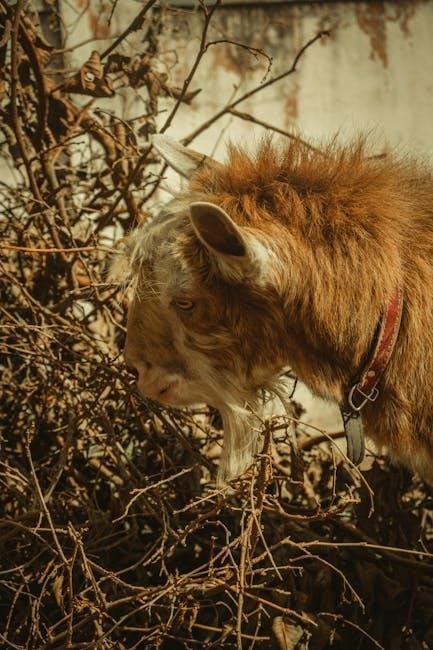
Analyzing the downloadable PDF of “The Goat, or Who Is Sylvia?” reveals Albee’s deliberate manipulation of names and language to expose hypocrisy.
The very title, posing a question about a goat, immediately disrupts conventional expectations and foreshadows the play’s unsettling themes.
“Sylvia”, a traditionally human name, assigned to an animal, underscores the blurring of boundaries and challenges definitions of love and desire.
The PDF allows for tracing how characters’ language shifts – from polite discourse to raw, accusatory outbursts – mirroring their emotional unraveling.
Albee employs precise word choice to highlight the absurdity of societal judgments and the inadequacy of language to express forbidden feelings, readily apparent within the script’s text.
Recurring Imagery and its Interpretation
Examining the “The Goat, or Who Is Sylvia?” PDF reveals recurring imagery central to understanding Albee’s provocative themes.
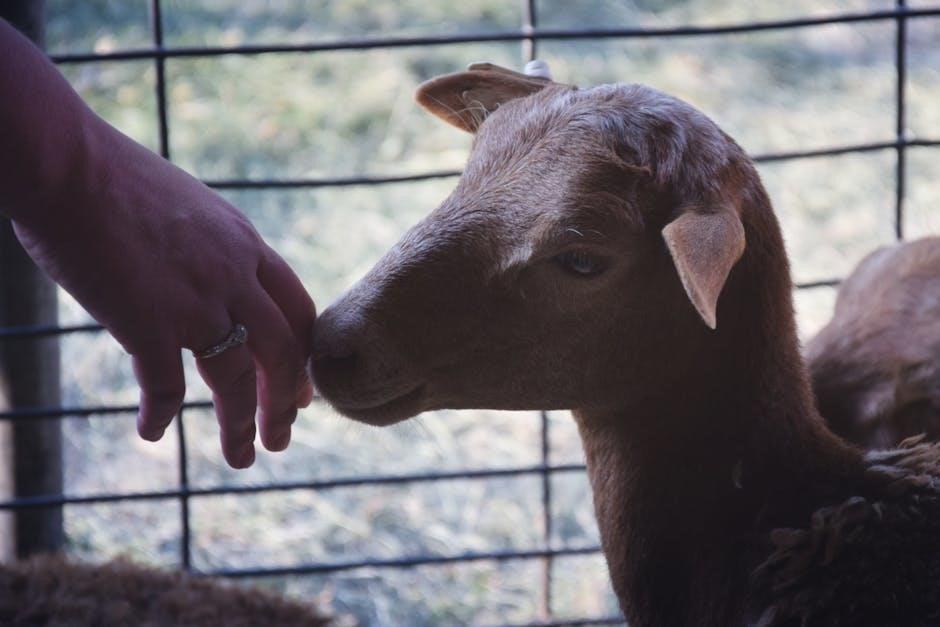
The goat, Sylvia herself, functions as a potent symbol of the forbidden, challenging societal norms and conventional attraction.
References to crying – Stevie’s question about whether goats cry – highlight the play’s exploration of empathy and the boundaries of compassion.
The PDF allows close reading of stage directions, noting how physical space and gestures reinforce feelings of isolation and betrayal.
Albee utilizes stark contrasts and unsettling juxtapositions, creating a disturbing atmosphere that mirrors the characters’ internal turmoil, vividly presented in the downloadable script.
Critical Reception and Analysis
PDF versions of the play facilitate in-depth scholarly analysis, revealing initial controversies and diverse academic interpretations of Albee’s daring work.
Initial Reviews and Controversies
The play’s 2002 premiere ignited significant debate, with critics grappling with its provocative subject matter – a man’s love for a goat named Sylvia.
Access to the script via PDF format quickly spread, fueling wider discussion and analysis amongst theatre professionals and academics.
Early reviews often highlighted the play’s shocking nature, questioning Albee’s intent and the boundaries of acceptable dramatic exploration.
Some critics lauded its boldness and unflinching examination of societal taboos, while others found it gratuitous and disturbing.
The availability of the PDF allowed for immediate and widespread engagement with the text, contributing to the intensity and longevity of the controversy surrounding “The Goat.”
PDF versions became essential tools for study and performance, despite ongoing ethical considerations regarding unauthorized distribution.
Academic Interpretations of the Play
Scholarly analysis of “The Goat, or Who Is Sylvia?” frequently utilizes the readily available PDF versions of the script for close textual study.
Interpretations often center on the play’s deconstruction of conventional notions of love, desire, and the “other.”
Researchers explore the symbolism of Sylvia, viewing her as representing forbidden desire, societal transgression, or a rejection of human limitations.
The play’s tragic structure, mirroring classical Greek tragedies, is a common focus, examining Martin’s fatal flaw and inevitable downfall.
PDF access facilitates comparative analyses with Albee’s other works, particularly “Who’s Afraid of Virginia Woolf?”, revealing recurring themes of marital discord and existential angst.
Digital access has broadened the scope of academic discourse, enabling global engagement with Albee’s challenging and controversial masterpiece.
The Play’s Place in Albee’s Oeuvre
“The Goat, or Who Is Sylvia?”, often accessed via PDF copies of the script, represents a significant, albeit controversial, turning point in Edward Albee’s prolific career.
Following the success of “Who’s Afraid of Virginia Woolf?”, Albee continued to challenge societal norms, and this play pushes boundaries even further.
Scholars note its thematic resonance with his earlier works, particularly explorations of marital breakdown and the search for authenticity.
However, the explicit nature of the taboo explored – bestiality – distinguishes it as uniquely provocative.
The availability of the play in PDF format has aided comparative studies, highlighting Albee’s consistent engagement with existential themes and dramatic innovation.
It solidifies his reputation as a playwright unafraid to confront uncomfortable truths about human desire and societal hypocrisy.

The Goat, or Who Is Sylvia? as a Tragedy
PDF versions of the script reveal tragic elements, mirroring classical structures with Martin’s flaw leading to devastating consequences and profound loss.
Elements of Classical Tragedy in the Play
Examining PDF versions of Albee’s script illuminates striking parallels to classical tragedy; Martin’s downfall echoes those of tragic heroes like Oedipus, stemming from a fatal flaw.
The play’s intense suffering, moral dilemmas, and inevitable catastrophe align with Aristotelian principles, evoking pity and fear in the audience.
Furthermore, the chorus-like function of Ross, offering commentary and insight, reinforces this tragic structure.
The revelation of Martin’s secret, a peripeteia, initiates a reversal of fortune, leading to the play’s devastating climax.
Accessing the full text through PDF formats allows for detailed analysis of these elements, confirming Albee’s deliberate engagement with the tragic tradition.
Martin’s Tragic Flaw and Downfall
Analyzing the PDF script reveals Martin Gray’s hubris – an excessive pride and self-assuredness – as his central tragic flaw.
He believes his intellectual and social standing shields him from conventional morality, leading to his shocking confession.
This arrogance blinds him to the devastating consequences of his actions, initiating his rapid downfall.
The play meticulously charts his descent from respected architect to social pariah, losing his wife, family, and reputation.
PDF access facilitates tracing this arc, demonstrating how Martin’s inability to acknowledge societal boundaries ultimately destroys him, fulfilling the classic tragic pattern.

Availability of the Play in PDF Format
PDF copies of “The Goat, or Who Is Sylvia?” are accessible online, ranging from free downloads to paid versions, often around 1-6MB in size.
Sources for Downloading “The Goat, or Who Is Sylvia?” PDF
Locating a PDF of Edward Albee’s provocative play requires navigating various online platforms. Several websites host play scripts, though availability fluctuates. Academic databases, often accessible through university libraries, frequently contain downloadable versions for scholarly purposes. Online bookstores, such as those specializing in dramatic literature, may offer PDFs for purchase.
Furthermore, platforms like Scribd and similar document-sharing sites sometimes feature uploaded copies, though these may raise copyright concerns. Henrietta Brusasco has uploaded a version viewed 1,821 times and downloaded 158 times. Always verify the legitimacy of the source before downloading to ensure compliance with copyright laws and avoid potentially harmful files. A search using specific keywords like “Albee The Goat PDF” will yield numerous results, requiring careful evaluation.
Legality and Ethical Considerations of PDF Downloads
Downloading PDFs of copyrighted plays like “The Goat, or Who Is Sylvia?” presents legal and ethical dilemmas. Obtaining a copy without proper authorization constitutes copyright infringement, potentially leading to legal repercussions. Supporting playwrights and publishers through legitimate purchases—either physical copies or authorized digital downloads—is crucial for fostering continued artistic creation.
While some sources claim availability, verifying the legality of the download is paramount. Utilizing library resources or purchasing from reputable vendors ensures ethical access. Unofficial downloads may also expose users to malware or viruses. Respecting intellectual property rights demonstrates support for the arts and upholds legal standards within the creative community.
Reliable Online Resources for Play Texts
Securing a legitimate copy of “The Goat, or Who Is Sylvia?” requires utilizing trustworthy online platforms. Major online bookstores frequently offer digital play scripts for purchase, ensuring legal access and supporting the author. Academic databases, accessible through university libraries, often contain scholarly editions of the play, suitable for research and study.
Additionally, websites specializing in theatrical publishing, like Samuel French or Dramatists Play Service, provide authorized scripts. These resources guarantee authenticity and adherence to copyright regulations. Avoiding unofficial download sites minimizes the risk of encountering malware and supports the playwright’s rights, fostering a sustainable ecosystem for dramatic literature.